
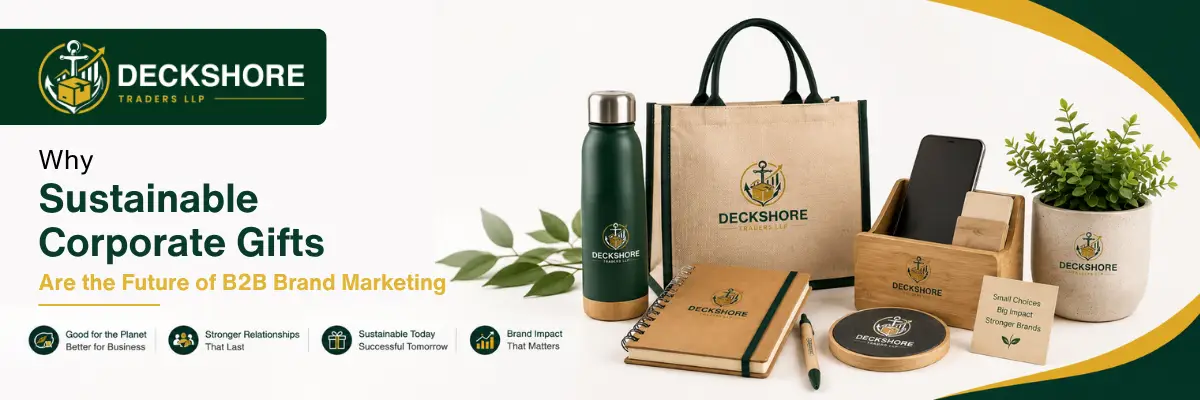
Picture this. Your team has just finalised a client gifting order, boxes are packed, courier is booked, and then someone in the meeting asks a simple question. What happens to this once the client is done with it? Nobody has a quick answer. That small pause says a lot about where corporate gifting is heading right now, and it is worth paying attention to before your next order goes out.
Why Eco-Friendly Gifting Is Transforming B2B Marketing
Corporate gifting used to be a fairly simple checklist item. Pick something branded, order it in bulk, ship it out before the deadline. That approach still exists, but it is quietly losing ground. Clients and employees are noticing what a gift is made of, how long it lasts, and whether it feels like it was chosen with some thought. According to PPAI’s Product Power 2026 consumer research, 76% of people say sustainability actually influences whether they keep and use a product at all. That is not a small number for anyone spending a gifting budget hoping the item does not end up forgotten in a drawer.
This shift is exactly why sustainable corporate gifts are becoming part of everyday B2B conversations rather than a niche request. Procurement teams are asking vendors different questions than they did a few years ago. Marketing teams want merchandise that reflects well on the brand not just merchandise that exists. And this is where green B2B marketing starts to matter, because the gift itself has quietly become a small but visible extension of how a company presents itself to the outside world.
Table of Contents
ToggleWhat Makes a Corporate Gift Truly Sustainable?
Here is where a lot of confusion creeps in. A product is not sustainable simply because the packaging says eco-friendly in bold letters. Real sustainability shows up earlier and later than most people think, starting from how the material was sourced and continuing right up to what happens once the recipient is finished using it.
A genuinely sustainable gift usually holds up to three simple questions. Was it made using responsible materials or manufacturing practices? Will it actually get used more than once? And does it avoid becoming waste within a few weeks of being unboxed? A reusable steel bottle that someone carries to work every day does far more for a brand than a plastic gadget that gets used once and then quietly disappears. That is the difference between decoration and genuine eco friendly promotional products.
This is also where eco corporate gifting solutions need a bit of nuance. Sustainability is not one fixed formula. A tech company gifting clients and a manufacturing firm gifting factory staff will land on very different products, and that is completely fine. What matters is the reasoning behind the choice, not a rigid checklist applied the same way every time.
How Green Merchandising Strengthens Corporate CSR Goals
Most companies already have some version of a sustainability commitment sitting in a policy document or an annual report. The gap usually shows up in execution, and gifting is one of the easiest places to close that gap without much extra effort.
When a business consistently chooses greener merchandise it sends a quiet but consistent signal to employees and clients alike. It says the company’s values are not limited to a slide in a presentation. This is exactly how green corporate gifting feeds into a longer term sustainable brand strategy because one thoughtful gift barely moves the needle, but a pattern of thoughtful choices builds a reputation over time. Interestingly, a joint study by PPAI and ASI, carried out with the UK based climate research firm 51toCarbonZero, found that promotional products generate up to eight times less carbon per memorised impression compared to digital advertising. For a CSR team trying to justify why branded merchandise still deserves a place in the marketing mix, that is a genuinely useful data point to keep in the back pocket.
Key Benefits of Switching to Eco Friendly Swag
The benefits here go beyond simply feeling good about the choice. Businesses that move toward sustainable swag items tend to notice a few practical outcomes fairly quickly. Recipients associate the brand with better quality rather than mass produced giveaways. Products last longer, which means the branding stays visible for months instead of days. Vendors who prioritise sustainable sourcing often reduce the reputational risk that comes with handing out items people quietly throw away.
There is data backing this pattern too. PPAI’s 2025 industry figures show sustainable products accounted for close to fourteen percent of total promotional products sales, a share that has grown steadily each year rather than spiking briefly and fading out that kind of steady growth suggests this is less of a passing trend and more of a shift in how businesses expect merchandise to perform.
How to Select High-Impact Sustainable Gifts for Clients
Choosing the right gift is where most of the real decision making happens, and it is also where companies tend to overthink or underthink the process. A useful starting point is to think about the recipient before thinking about the product. A senior client and a new employee will not respond to the same kind of gift, even if both fall under the sustainable category.
It also helps to resist the urge to plaster a logo across every visible inch of the product. A large logo can make a gift feel like an advertisement rather than something the recipient genuinely wants to use, and that undercuts the whole point of choosing eco friendly client gifts in the first place. Packaging deserves attention too, since a beautifully made product wrapped carelessly can still leave the wrong first impression.
A common mistake worth avoiding is assuming sustainable automatically means expensive. Plenty of well designed environmentally friendly merchandise fits comfortably within regular gifting budgets once you move past the assumption that green options are always priced at a premium. The goal is simple. Choose something the recipient will actually use, something that reflects the occasion and something that does not need an apology once it reaches their desk.
FAQs
What are sustainable corporate gifts?
These are gifts made using responsible materials, ethical production methods, or designs meant for repeated use rather than single use disposal, chosen specifically for business relationships like clients, employees or partners.
Why is eco-friendly gifting important for B2B brand marketing?
Because gifting has quietly become a visible reflection of a company’s values and clients and employees increasingly notice whether a brand’s actions match its stated commitments.
What materials are used in sustainable corporate gifts?
Common choices include recycled fabrics, bamboo, stainless steel, organic cotton and other materials selected for durability and lower environmental impact, depending on the product category.
How do eco-friendly products improve brand reputation?
They signal that a company thinks beyond short term branding, which tends to build more trust with clients and employees who are paying closer attention to sustainability than they used to.
Are sustainable promotional products more expensive than standard options?
Not necessarily. Pricing depends on the specific product and quantity, and many sustainable options fit within standard gifting budgets once the right supplier and product type are chosen.
Recent Post
Gift With Purpose
Curated corporate gifts that strengthen relationships, celebrate milestones, and keep your brand remembered.